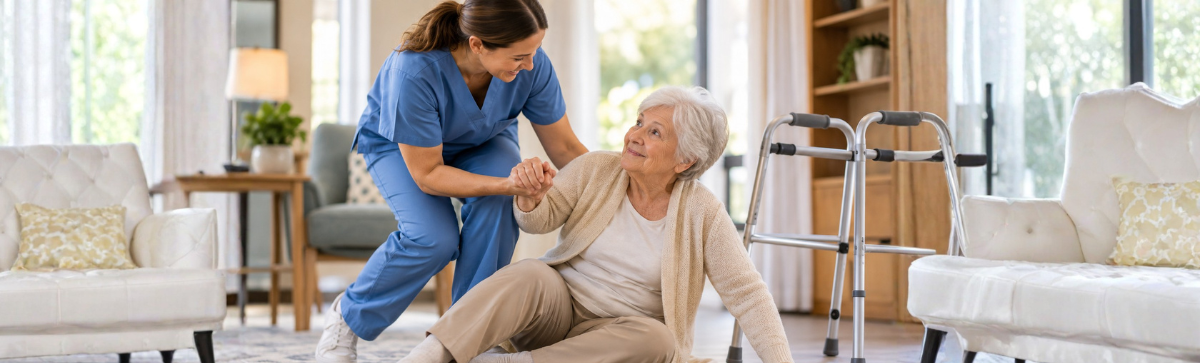
Approximately two hip fractures occur every minute in the United States and approximately 27 per minute worldwide. Most hip fractures occur among older adults as a result of accidental falls. Understanding hip fracture risk is especially important in senior living, where falls can have serious consequences. Sadly, among 66,746 patients with hip fracture, 11,899 died during a 12-month follow-up period. Additionally, hip fractures can cause impaired mobility, pain, and substantial health care costs.
Thinning bone with aging is associated with osteoporosis and increased susceptibility to hip fracture. According to a recent JAMA review of hip fractures, hip fractures occur when the force applied to the hip exceeds its strength. Therefore, the key determinants of hip fracture risk are bone strength and excessive forces. Treatments for hip fractures can be invasive and may include surgical joint replacement, physical therapy, fall reduction strategies, and medications to protect against future fractures.
This information should cause us all to pause because it is sobering. McKnight’s Long-Term Care News recently reported on research examining one-year mortality following hip fractures among older adults. We work with geriatric residents and understand that they often fall, but are we really doing everything we can to assist in preventing a catastrophic injury that could lead to death within a year?
We can’t bubble wrap our residents or bungee them from the ceiling. However, maybe we are missing something else? It might be a good time to review your current fall program and assess how effective it is. Look at your frequent fallers and review their care plans. Are they relying on EHR “canned” interventions rather than interventions individualized to the resident?
There are lots of rocks to unturn when evaluating hip fracture risk and your approach to falls. Discuss this at your next QAPI committee meeting. Review what is working, what isn’t, and whether there is something you may be missing?
Stay well and stay informed!