
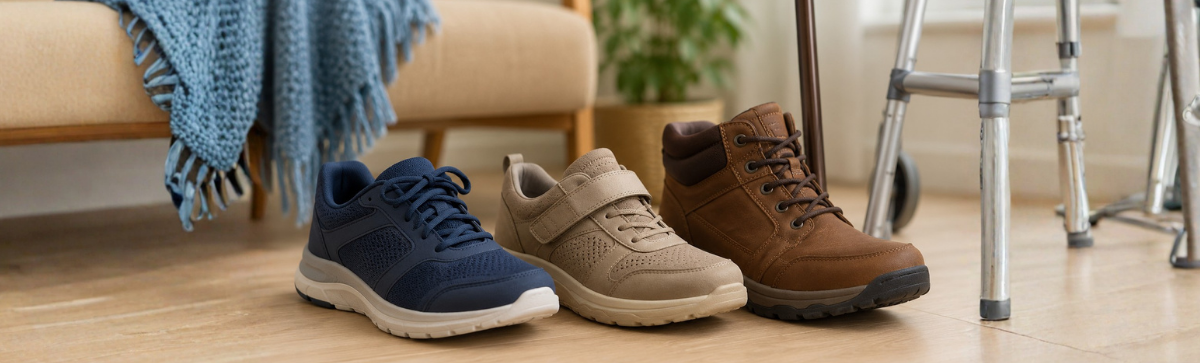
Footwear plays a critical role in gait and balance control in older adults. In fact, footwear and fall prevention may be more closely connected than we realize. Shoes help facilitate “somatosensory feedback” from the foot. But what exactly does that mean? According to “Doctor Google,” somatosensory feedback is sensory information sent from the skin, muscles, joints, and connective tissues of the foot to the central nervous system (CNS). This feedback helps adjust muscle activity to maintain balance. It also guides step timing, foot placement, weight distribution, and awareness of the foot’s position in space, also known as proprioception.
As we age, many people experience reduced sensitivity in their feet and may need to adjust the type of footwear they wear. Several studies have demonstrated that improper footwear can increase the risk of falls among older adults. In addition, many individuals who suffered hip fractures were found to be wearing inappropriate footwear. A recent systematic review examining footwear characteristics and their impact on gait and balance identified several important findings. As highlighted in McKnight’s Long-Term Care News:
- Shoes with minimal outsoles, similar to barefoot-style footwear, demonstrated consistently positive outcomes. They improved walking and balance ability while contributing to lower muscle demand. This may enhance stability during the weight-acceptance phase of gait.
- Textured and supportive, sport-like footwear may affect muscle engagement in ways that improve balance.
- The ankle plays a critical role in maintaining balance and postural control. Therefore, external support from a high collar may offer significant advantages. High-collar footwear may help reduce ankle motion and improve balance, particularly during walking tasks.
The systematic review published in the Journal of the American Geriatrics Society provides a deeper look at these footwear characteristics and their potential effects on gait and balance in older adults.
These characteristics may be beneficial for improving gait and balance in older adults. This is all great information, but only if you use it! Consider working with your podiatry provider and medical staff to take a deeper dive into this research. Identify residents who are at risk for falls or who have already experienced a fall. Then, as part of the root cause analysis, consider whether footwear may have contributed and whether a change could help prevent the next fall.
Footwear and fall prevention should also be part of conversations with residents and families. Before you begin, however, please talk with them about the risks associated with wearing “Croc”-type shoes. Sure, they may be trendy, but trendy doesn’t necessarily mean appropriate footwear for every resident.
Stay well and stay informed!
Related Posts


Angie Szumlinski
|
September 2, 2026