
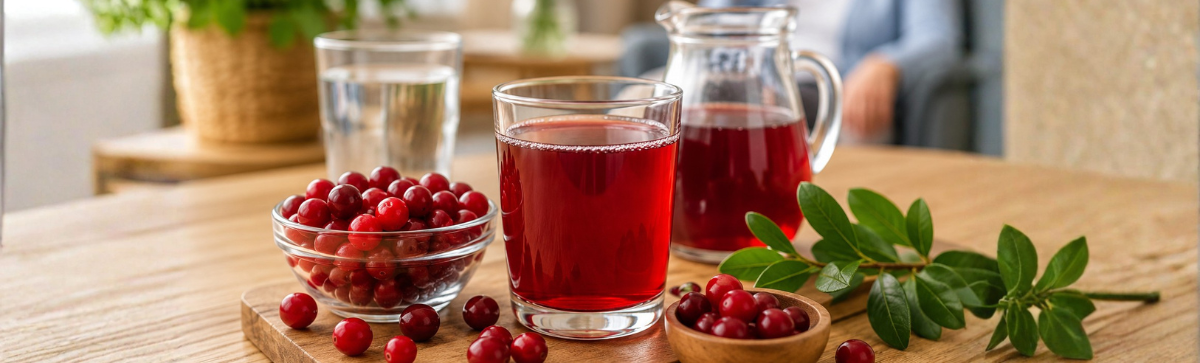
Sorry, not a great subject, however, one that is far too familiar to most of us! You know the drill: a resident becomes more confused, behaviors escalate, and we immediately assume a UTI. Many times, we are correct. However, before jumping to conclusions, have you considered asking caregivers about the resident’s fluid intake first? Changes in mental status and behaviors can also be caused by dehydration, which is why conversations about Cranberry Juice and UTIs may be more important than many people realize.
Sure, it can be challenging to encourage residents to drink more fluids. However, researchers continue to explore ways hydration and nutrition may help support urinary tract health. In a recent study published in the ASM Journal, researchers found that cranberry juice markedly potentiated the antibacterial activity of antibiotics while also limiting the emergence of antibiotic resistance. The findings discussed in the ASM Journal cranberry juice study suggest cranberry juice may offer more benefits than many people previously realized.
Who knew? I, for one, have always promoted cranberry juice, not because there was scientific evidence, but simply because it was what my mother taught me!
Think about your residents. How many have experienced one or more UTIs in the past six months? Treating with antibiotics is often the norm. However, with each ensuing infection, bacteria can become more resistant. Maybe adding some cranberry juice and no, not the sugar-laden cranberry juice cocktail, could help prevent the next UTI. It may be worth trying with a few high-risk residents while monitoring their preferences and overall hydration.
There are also many cranberry supplements available over the counter. Of course, it is always important to check with the attending physician first. Still, Cranberry Juice and UTIs may be a conversation worth having as communities continue searching for ways to support resident wellness and reduce recurring infections.
Stay well and stay informed!