Ever notice how flu season always seems to show up just when you thought you were in the clear? This year, evolving flu strains and vaccine mismatch are shaking things up earlier than expected, and the ripple effects could be significant for senior living communities.
According to new data published in the British Medical Journal, flu activity has surged in the UK, particularly among young adults and children. Antonio Ho, MD, from the University of Glasgow, explained that the current circulating influenza A (H3N2) virus “acquired seven new mutations over the summer,” creating a strain that’s quite different from what’s included in this year’s vaccine.
Meanwhile, Japan is already facing what it calls a flu epidemic, weeks ahead of its typical peak between late November and early February. Not only is the virus behaving differently, but Japanese health authorities have also flagged potential signs of reduced response to common antiviral medications, as described in Japan Flu Outbreak: Evolving Viruses Challenge Treatments.
The concern doesn’t stop there. A recent piece in Nature highlights how this year’s A (H3N2) strain is diverging rapidly, making it harder for scientists to predict which variants will dominate each season. As explained in Nature’s coverage of the H3N2 mutations, this acceleration in viral evolution increases the chances of a vaccine mismatch, something senior living communities can’t afford to overlook.
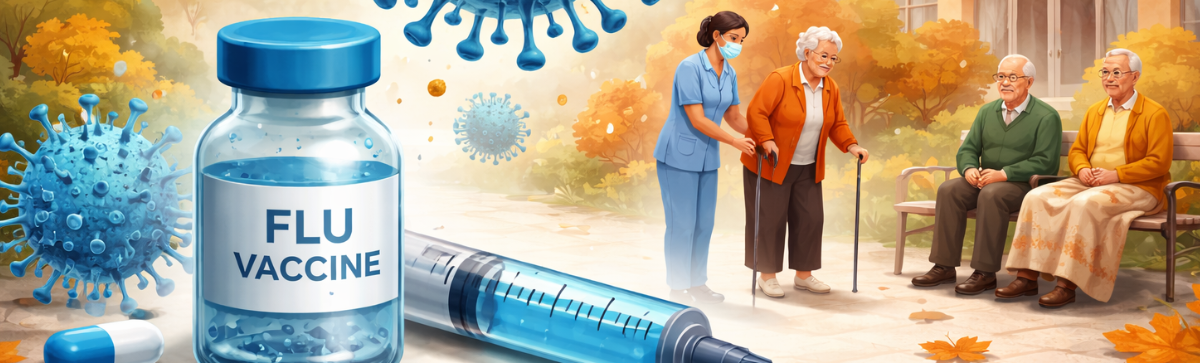
Why does this matter so much? Because flu vaccines are designed based on predictions of what strains will circulate. When viruses evolve faster than expected, there’s a higher risk of a mismatch. Even a small mismatch can lower vaccine effectiveness, especially concerning for residents in senior living communities who may already have chronic conditions or weakened immune systems. Still, as the article New Flu Strain Poised for Possible Takeover points out, even a mismatched vaccine offers protective benefits. It’s worth getting.
So yes, the flu shot may not be a perfect match this year. But that little poke still matters. It can reduce the severity of illness, slow spread in your community, and potentially save lives. If you’re working in a senior living community, now’s the time to encourage vaccination, monitor for symptoms, and keep an eye on national and international flu trends tied to evolving flu strains and vaccine mismatch.
Stay well and stay informed!