
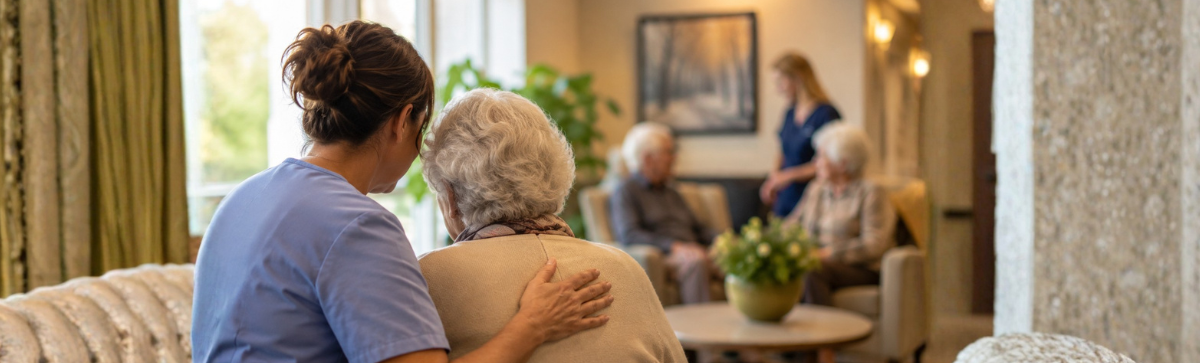
The United States is facing a long-anticipated explosion in the population of the “oldest old.” At the same time, nursing home capacity for dementia care is becoming increasingly strained. For decades, demographic projections have predicted rapid growth in the population of people age 80 and older. This growth will increase pressure on long-term services and supports. What those projections did not anticipate was a sustained reduction in nursing home-based services at the same time.
Nearly 10% of U.S. nursing homes closed between 2011 and 2021. The COVID-19 pandemic also marked a turning point in nursing home operating capacity. In addition, staffing shortages, financial strain, and the demand for private rooms have caused many communities to decrease available beds. As discussed in McKnight’s Long-Term Care News, this shrinking supply could become increasingly problematic. At the same time, the number of people living with dementia continues to grow.
Dementia is a leading reason for nursing home placement. These residents often require continuous supervision and structured environments. They also need trained staff who can manage complex cognitive and behavioral needs. A recent New England Journal of Medicine perspective highlights this growing concern. An aging population with dementia may soon collide with a decreasing supply of nursing home care.
Alternatives to nursing homes include home- and community-based services and assisted living communities. These options are generally preferred by much of the population, and access has expanded greatly over the past decade. However, these settings may not always be able to meet the needs of people living with moderate-to-severe dementia. That is why nursing home capacity for dementia care remains an important part of the long-term care conversation.
At the end of the day, nursing homes are not dinosaurs. However, if we are not careful, we may become extinct! As a sector, it is time to evaluate where we are and how we can best meet future needs. That may include more memory care-focused units and trained, competent staff. We also need programming designed to meet the ever-changing needs of our “oldest old.”
Stay well and stay informed!