
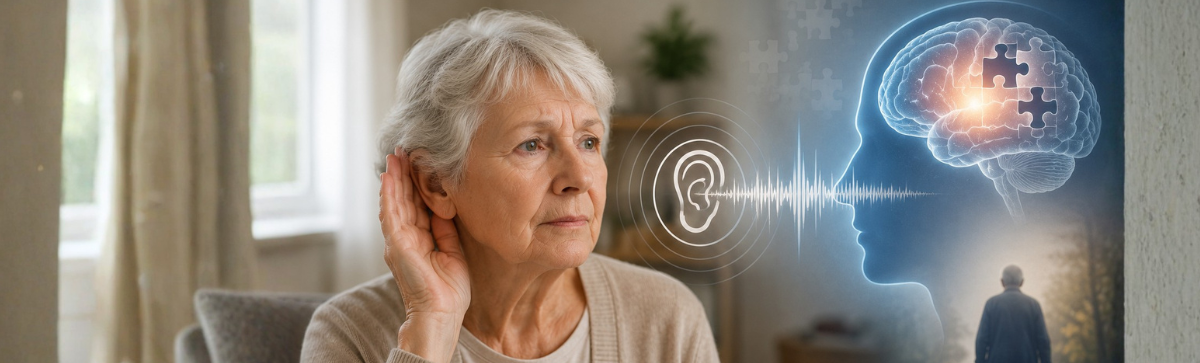
The connection between hearing loss and dementia has received increasing attention in recent years. While researchers continue to explore exactly why these conditions appear to occur together, a recent study published by the Alzheimer’s Association suggests that auditory brain dysfunction may play an important role. Auditory brain dysfunction, often referred to as Auditory Processing Disorder (APD), occurs when the brain struggles to process auditory signals effectively. As a result, individuals may have difficulty understanding speech, especially in noisy environments, even when their hearing appears normal.
Interestingly, APD differs from hearing loss. A person can develop APD later in life or be born with the condition. Researchers have also linked APD to conditions such as ADHD and autism, although it remains a distinct diagnosis. Treatment options may include auditory training and other therapies designed to improve communication and help individuals manage symptoms more effectively.
Researchers recently developed a non-verbal dichotic listening test (NVDLT) that uses everyday sounds rather than spoken words. According to findings published in the Alzheimer’s Association journal, the test identified dementia with impressive accuracy and predicted gray matter loss in brain circuits commonly affected by Alzheimer’s disease. These findings suggest that clinicians may someday have a new tool to help identify dementia earlier in the disease process.
The bottom line is that this research raises important questions about the relationship between hearing loss and dementia. Does hearing loss increase the risk of dementia, or does dementia contribute to hearing difficulties? The answer remains unclear. What we do know is that residents with hearing deficits often experience social isolation, and isolation itself can contribute to cognitive decline. Keep residents engaged, active, and involved in daily activities. Watch for signs and symptoms of hearing deficits and pursue appropriate evaluation and treatment when concerns arise. After all, if residents cannot hear, they may choose not to participate.
Stay well and stay informed!