
Oral frailty screening matters because oral frailty is more than “just dental.” It’s an age-related decline in oral and pharyngeal function. It can show up as fewer teeth, decreased tongue pressure, and impaired chewing and swallowing. It can also reduce social participation around meals. Research links poor oral function to lower protein intake, reduced appetite, and weight loss. Over time, this can lead to physical frailty. That creates a cycle where oral and overall frailty worsen together.
This concept has been gaining traction for a while. It was recently sharpened for use in the U.S. through the Oral Frailty Index-8 (OFI-8). The OFI-8 is a patient-reported measure that was developed in Japan. The American Academy of Otolaryngology–Head and Neck Surgery Foundation published a study explaining how the OFI-8 was culturally adapted for U.S. older adults. The updates included swapping Japanese food examples for U.S.-familiar foods of similar texture. The authors also refined several items and the instructions after participant feedback. Research has also explored how oral function connects to nutrition and frailty. A related ScienceDirect publication looks at oral function and frailty-related impacts.
Although this isn’t a “new” idea, what a practical resource for identifying and diagnosing oral frailty early. The OFI-8 looks at eight key areas including:
• Difficulty eating hard foods
• Coughing when drinking liquids
• Denture use
• Dry mouth
• Reduced social outings
• Ability to chew hard foods
• Toothbrushing frequency
• Dental visit frequency
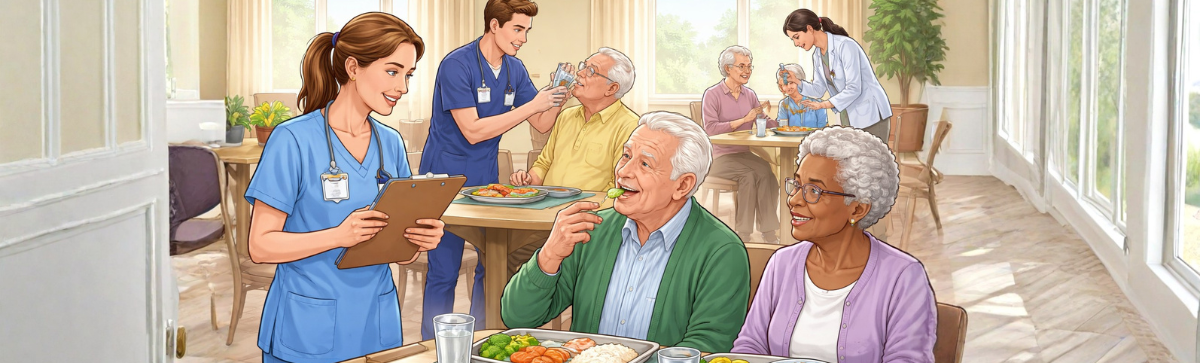
Now the real question is the one that plays out at every meal. Are you paying attention during meals? Do you have your speech pathologist rounding in the dining room? Are caregivers reporting promptly when a resident has trouble chewing or swallowing? Are they reporting coughing during meals? This belongs in QAPI. The AAPACN discussion on a screening tool adapted for U.S. older adults to detect oral frailty offers a useful way to think about applying a tool like this. Use the information to build a plan. Educate caregivers. Schedule dining rounds. Monitor the dietary tray and service line. Schedule dental visits. Make mealtime a true “social event.” You may be surprised by what you’re already doing well. You may also spot quick wins for improvement.
Stay well and stay informed!