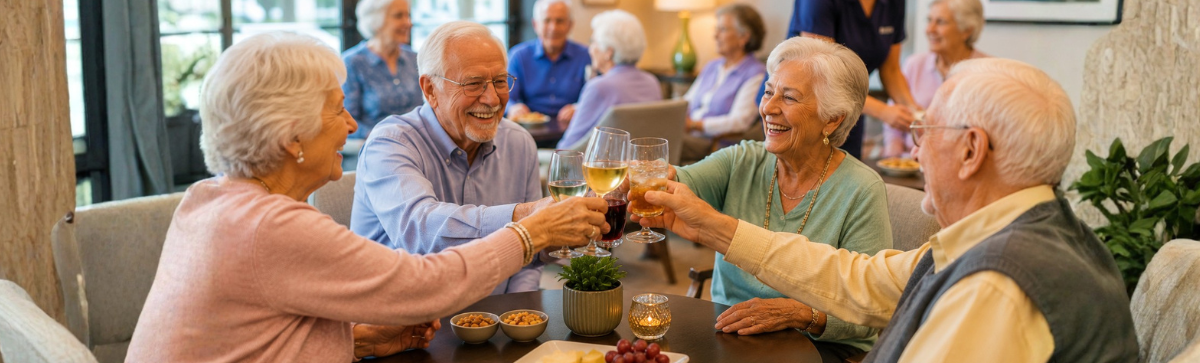
Have you ever walked past the activity calendar in a senior living community and noticed “happy hour” listed on a Friday afternoon? Resident happy hour safety may not be the first thing that comes to mind when you see a room full of residents enjoying snacks, music, conversation, and maybe even a cocktail, but it is an important consideration.
It is not uncommon to visit a post-acute care center and find “happy hour” on the activity calendar. Many communities have happy hours on Fridays, and the rooms are generally full of residents. Are these residents alcohol dependent? Likely not. Stop and think about it. Happy hours tend to be social events, a way to wind down from a long week, or simply an activity that brings people together. Sure, many happy hours include adult beverages, but not all of them.
In fact, in the state of Minnesota, current law requires communities to obtain a license to organize events that include alcohol, something administrators say creates unnecessary barriers for simple social gatherings. There has been so much discussion surrounding this topic that a current bill would:
- Allow communities to serve alcohol without a liquor license
- Require adherence to state alcohol safety laws
- Permit staff age 18 and older to serve drinks
- Prohibit over-serving and require appropriate conditions
Not surprisingly, the measure has already received bipartisan support and is now headed to the full House for consideration. Nurse.org recently highlighted the ongoing debate around Minnesota’s proposed nursing home happy hour bill and the concerns surrounding resident autonomy and alcohol service in long-term care settings.
At the end of the day, it is not whether residents deserve autonomy because we all agree they do. The question is whether systems are in place to support that autonomy appropriately. Sound familiar? Resident-centered care? As one resident said: “We all get together, and there are snacks, a lot of times we have talent, someone singing, playing piano or guitar, it’s just a happy time.”
Not to be “Debbie Downer,” but please take note. If your community does or is considering making alcoholic beverages available for residents, you are ultimately responsible. You have the right to require attending physicians to determine whether a resident can safely consume alcohol, but who monitors intake, intervenes if a resident becomes impaired, or responds if a fall or adverse event occurs after participating in happy hour?
Even a small amount of alcohol can affect a resident who is taking certain medications. Know your residents. Be sure you have a physician order clearly stating the resident may enjoy an alcoholic beverage. Watch who is serving the cocktails and consider limiting residents to one or possibly two drinks during a seating. Resident happy hour safety depends on balancing resident choice with thoughtful oversight and individualized care, always remembering the principle of “first do no harm.”
Stay well and stay informed!