
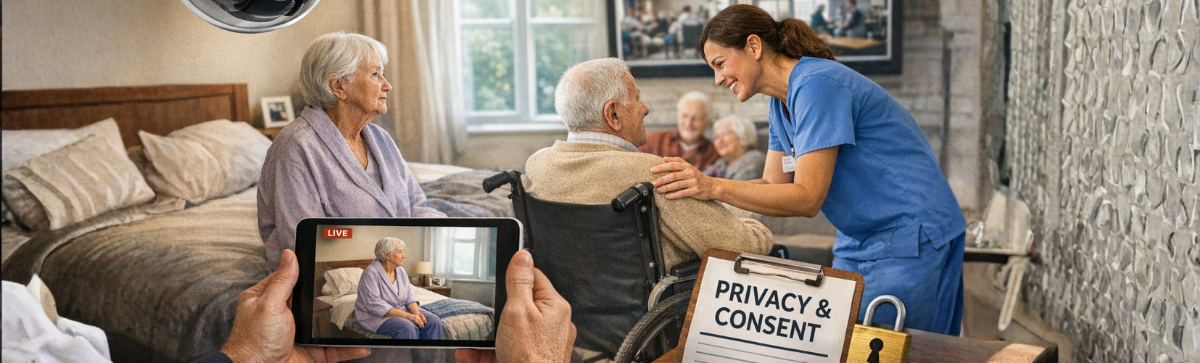
Have you ever wondered how much visibility is too much when it comes to caring for residents? Resident monitoring in senior living communities continues to spark strong opinions on both sides. On one hand, families want reassurance. At the same time, providers work to maintain dignity, while policymakers try to strike the right balance. Recently, reporting from Kentucky highlights ongoing legislative efforts surrounding the use of monitoring devices in care settings, while coverage from Iowa Capital Dispatch outlines how a recent bill aimed at ensuring resident access to “granny cams” was ultimately rejected.
Although these conversations are not new, they continue to gain traction as technology becomes more accessible and expectations from families shift. For example, monitoring devices can increase transparency and accountability, while also giving families a greater sense of reassurance. In addition, these tools may help identify concerns earlier; however, they introduce real concerns around privacy, consent, and the overall tone within a community.
Consider the resident experience. For some individuals, a camera in a private space may feel intrusive, even when the intent focuses on protection. On the other hand, others may feel more comfortable knowing there is an added layer of oversight. Because of this, no single approach works for everyone, which is where the challenge lies.
From an operational standpoint, monitoring also influences staff behavior. In certain situations, care delivery may shift, or staff may feel added pressure or hesitation. Alternatively, monitoring can reinforce accountability and consistency. As a result, leadership should actively evaluate these impacts.
As you walk through your community, think about how resident monitoring in senior living communities fits into your current approach. Are your policies clear and consistently followed? Are residents and families fully informed? Do staff feel supported and confident in how to navigate these situations? Most importantly, clear communication remains essential.
Ultimately, balance remains the priority. Communities must protect residents while preserving dignity and trust. In the end, the decisions made today will shape how care is delivered tomorrow.
Stay well and stay informed!